
When most people think about health, they think about their heart, their brain, or maybe even their gut. But there’s another organ that rarely gets enough attention: Skeletal Muscle.
Far more than just “meat on our bones”, muscle is a powerful driver of health and longevity. It protects us against chronic disease, keeps our metabolism humming, and is one of the strongest predictors of how well we’ll age.
If there’s one change you can make today that will profoundly impact how you age, it’s this: eat more protein.
Why does this matter so much? My Grandparents were in their mid seventies when their lives started to shrink around them. Carrying groceries became difficult, stairs felt like mountains, and getting up from the floor after playing with their grandkids had become nearly impossible.
The day their youngest ran toward them with open arms and they couldn’t lift him…that was their breaking point. They decided they weren’t ready to sit life out.
I guided them on adequate intake of protein and beginning resistance training. They became determined and held each other accountable, often turning protein intake into a daily competition!
Six months later, they proudly told me how easy it was to pick up their growing grandchildren and how much more confidence they had in navigating through daily activities.
Muscle is not just about strength or appearance, it is one of the most powerful organs in your body. It influences your metabolism and your ability to stay independent as you age. Most importantly, it gives you the strength to keep trying new things, and continue to do the things you love.
Protein Intake: The Missing Link
Everything comes back to protein. It is the resource muscle depends on, the building blocks of all tissue in the body…yet it is the nutrient most people are neglecting.
The official FDA protein intake recommendation of 0.36 grams per pound of body weight (g/lb) is the amount needed to prevent deficiency…not to help you thrive. Research shows the optimal protein intake to build and maintain muscle is 0.7–1 g/lbs.
FDA protein intake recommendation: 0.36 g/lbs = minimum to prevent muscle wasting
0.54–0.73 g/lbs = good general target for health and longevity
0.73–1.0 g/lbs = optimal for healing, building muscle, and performance
Muscle and Metabolism: Your Internal Furnace
Here’s the part many people miss: muscle is the biggest driver of your metabolism. Your metabolic rate is the amount of calories you burn in a day without exercising; the higher the rate, the more you burn!
This is especially important, as your metabolism naturally slows down over time. People who consistently train and build muscle have higher resting metabolic rates. This increased rate pushes the body to burn fat, maintain higher energy levels, and regulate hormones and blood sugar.
Aging with Confidence
Beyond metabolism, muscle is one of the strongest predictors of how well we’ll age. Recent studies have shown that low muscle mass and low strength, a condition called sarcopenia, predicts mortality more strongly than obesity.
People who maintain muscle are less likely to suffer falls, fractures, and hospitalizations. Something as simple as grip strength or leg power can even predict life expectancy.
The difference between aging well and living with limitations often comes down to whether you’ve invested in your muscle.
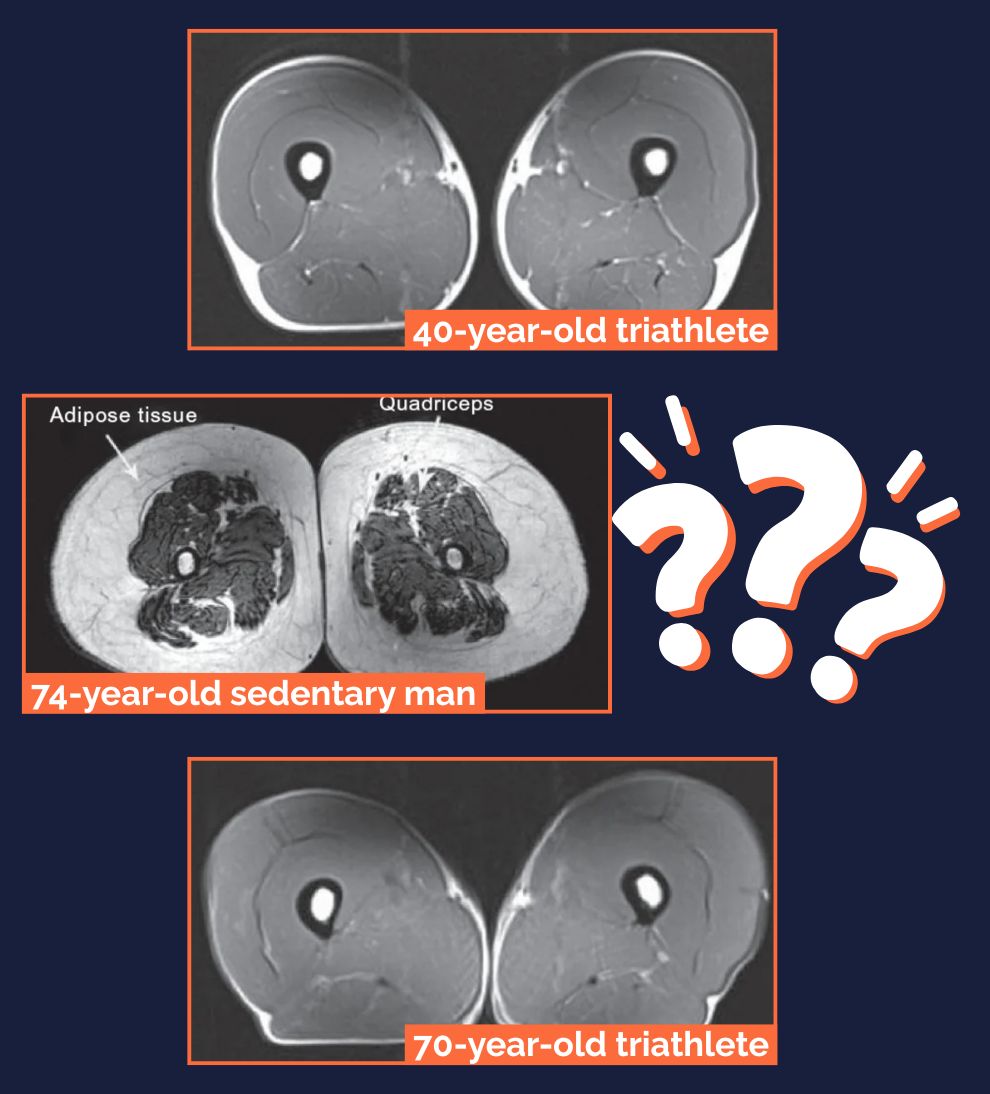
The images above show a cross-sectional MRI of the quadriceps muscles from three different individuals. The white represents fat and the grey represents muscle.
The picture in the middle is of a sedentary person with sacropenia, while the bottom picture shows a person who was dedicated to maintaining muscle mass. This demonstrates the true power of consistent exercise. The main difference between these men is not their age, but their activity level.
Whether this lit a spark under you, or made you think of a loved one, let this be the catalyst into a healthier life. Let’s shift the narrative from “I need to lose fat” to “I need to gain muscle!”, because muscle is the best fat burner!
Every bite of protein is an investment in your future. Every workout is a deposit into your metabolic bank account. Treat your muscle like the most powerful organ you have, because it is.